

PATRIARCH’S PROMISE
Some stories begin in the vineyard. Others begin with a promise.
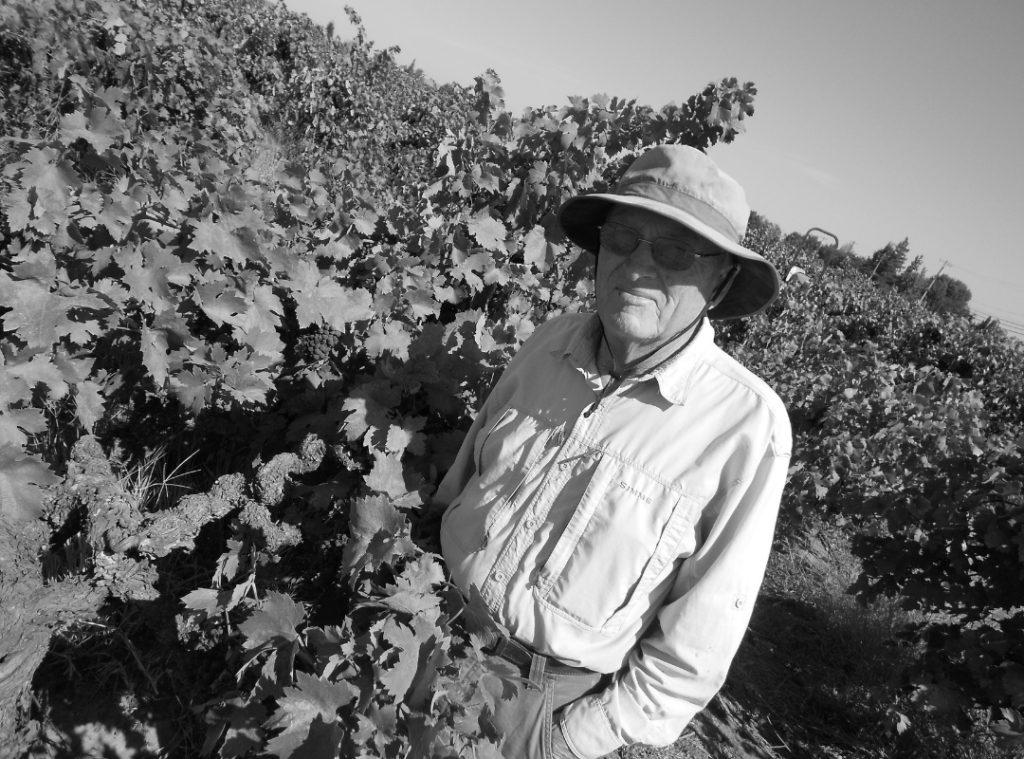
A wine that began with George Mettler, a fourth-generation winegrower with a deep respect for what came before him. He saw potential in a grape long overlooked.
A Promise Kept
We’ve been keeping a secret — and we’ve been keeping it for nearly two decades. As a family, I can’t think of anything else we’ve held back sharing as our business has grown. But the composition of our reserve wine, Patriarch’s Promise, is the one thing we have guarded closely since its inception. Very few have known over the years, and fewer still have guessed correctly. Even our own team didn’t know the secret for most of those years. But now it’s time to trust you with the story — because it mirrors a bigger one: the story of trusting the land and discovering the remarkable potential of our vineyards and our region.
Honestly, it’s been a gift to dive back into this history. It has prompted me to learn new things and to recover old pieces and memories I’d half forgotten. It’s also left me wishing I’d paid a little more attention and asked a few more questions growing up — and even through the start of the winery, when we were busy juggling a very young family, a brand-new business, and all new things for all of us.
Winegrowing runs deep in our veins, so when we started the winery in 2006, we committed from the very beginning to estate-grown and estate-produced wines. At the time, I don’t think we fully appreciated how that commitment would shape our growth as growers and winemakers — or how much it would come to define who we are. But I’m sure it’s what got my dad thinking about a small three-acre parcel on the Henry Ranch.
That little vineyard had been planted with a purpose, but not the one you might expect: its fruit was destined for the packing shed. Planted in the mid-1970’s, the block originally covered ten acres. Vintage after vintage, the block was farmed for tonnage — grapes packed and shipped back east to home winemakers and small producers. When we did some replanting on the ranch in 2006 to make room for other varietals for the winery, seven of those acres came out—but we couldn’t bring ourselves to pull the last three. My dad remembered the 1960s and ’70s, when Barengo Winery set out to make premium wines entirely from Lodi winegrapes. Among the labels Barengo produced was one made from this very grape, and my dad remembered it fondly. My dad had a great palate.
So he pitched the idea to Kyle and our team at the time to make a wine from that little 3-acre block. Honestly, they thought it was a little crazy. No one was making wine from this variety anymore — at least not in our region, and not for premium wine. Even at its height, very few wines labeled with this varietal were ever made. The large local wineries had moved away from buying it, most plantings had already been pulled out and replanted to mainstream varieties, and what little remained was disappearing into other red blends. But my dad was insistent. Or, as my mom would say, stubborn.
Remember, this vineyard had been farmed for high-tonnage packing fruit, with no real reference point for what wine it could produce. Taking on the project seemed a bit crazy. But two things you should know about Kyle: he has never been able to resist a challenge, and nothing drives him like coaxing the best possible wine out of the vineyards we farm. So he agreed to bring a small amount into the winery to assess — though, still not quite believing in the idea, the team labeled the barrels in code. If people knew what the varietal was, would they give it a chance? Would they believe it could become a beautifully elegant, ageable wine? Or would their preconceptions decide for them?
An Unhurried Transformation
So the process began — and it is a process. Grapevines are remarkably adaptive, but they take their time adjusting to the guidance of the farmer. The team prepared for the 2007 harvest by thinning the crop load dramatically, from upwards of ten tons an acre down to four or so. But after thirty years of being farmed for production, it took the vines a few more years to settle into their new rhythm.
Once the wine was in the cellar, Kyle and the team were no more convinced. The young wine was aggressive, full of pyrazines, all green bell pepper and vegetal notes, with intense structure and a bit of an abrasive edge.
Those few barrels from the first vintage sat in the back of the cellar. They’d get pulled out to rack and top along with our other wines, and tasted each time — and honestly, the promises my dad had made were a little hard to believe. It was so difficult to envision where this wine would land, or how it would fit our portfolio, that we didn’t bring the fruit in for the winery again until 2011.
Then, after about three years in barrel — a full year longer than our other reds — the promise started to reveal itself. What had been a beast was settling into a beautifully elegant, structured red wine. And no one was happier to be proven wrong than Kyle.
That first vintage yielded just 165 cases. As we continued to learn and the vineyard settled into its new normal, we discovered that in many years, blending multiple vintages together worked best — and ultimately, that’s the style we locked into. This wine still asks for extended time in barrel; it doesn’t like to be hurried. But it has become more approachable earlier on, without needing as much time. Almost luxurious.
Elegance and Structure in the Glass
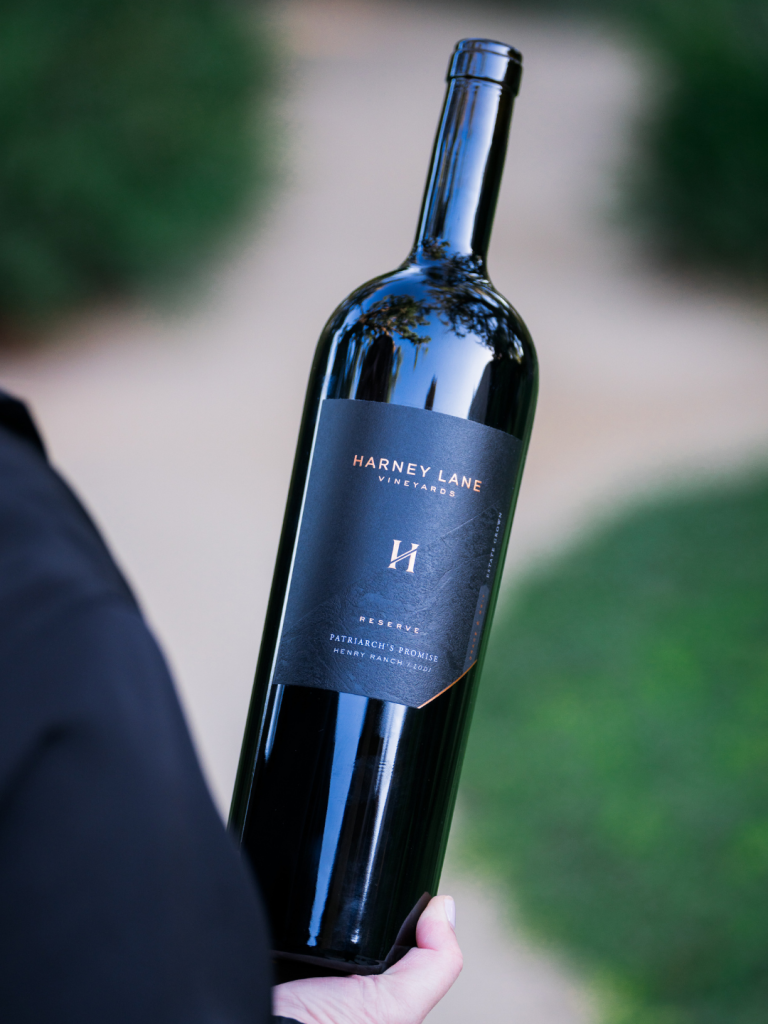
So what does a promise taste like? In the glass, this wine leads with dark fruit — black cherry and plum — layered over savory dried herbs and a whisper of baking spice. The structure my dad believed in is all there, but time has polished it: the tannins are fine and long, the texture plush without ever losing its backbone. It’s a wine with real dimension, one that keeps unfolding in the glass over the course of an evening.
This is not a wine for a hurried meal. Pour it alongside braised short ribs, a Sunday pot roast, herb-crusted lamb, or a mushroom risotto that took the better part of an hour to stir. And if you can bear to wait, don’t stop at one bottle. Patriarch’s Promise is built to age, and a few years laid down in your cellar will reward you the same way those extra years in barrel rewarded us.
The 20-Year Secret Revealed
For nearly two decades, the guessing game was half the fun. Sommeliers, club members, dinner guests — everyone had a theory, and we enjoyed every single one of them. But somewhere along the way, we realized the secret had started to work against the wine. Keeping it meant some people never got the chance to truly know a great wine and the nearly forgotten vineyard behind it. And the goal was never to hide this wine. The goal was always to share it.
If you’re wondering how a secret survives nearly two decades, you should meet my mom. Somewhere along the way, she became its most faithful keeper — holding the varietal close because she believed the mystery was how my dad wanted it. Knowing him, I’m not sure he would have kept it half this long; he was never much for secrets. But her conviction became part of the story itself, one more layer for anyone who tried to charm the answer out of us over the years. And in fairness, stubbornness runs in the family.
So here it is: Patriarch’s Promise is Ruby Cabernet.
And now we can finally tell the rest of the story, too. Those coded barrels from the first vintage? Kyle labeled them “007” — a wink at that 2007 vintage — and “Dark Horse,” then pushed them to the back of the stack, half hoping the experiment would quietly fade away. My dad wouldn’t let it. One more taste, one more year — three in all — until the beast became the wine he had promised.
Here’s one more confession the secret let us keep: in that earliest bottling, we weren’t sure the varietal could stand on its own, so we blended in a bit of Tempranillo for support. As the vineyard found its balance and we learned what this grape wanted, that safety net came off.
Today, Patriarch’s Promise stands entirely on its own — 100% Ruby Cabernet.
If the name Ruby Cabernet doesn’t ring a bell, you’re not alone — and that’s part of the story. The grape was created at UC Davis in 1936 by Dr. Harold Olmo, a cross of Carignan and Cabernet Sauvignon bred to handle Delta heat better than its famous parent. It found a home here: Ruby Cabernet was planted all over Lodi in the late 1960s and early ’70s, and it’s the variety behind those Barengo wines my dad remembered so fondly. And it wasn’t only a Lodi story: in the 1970s, even Ridge — one of California’s most respected producers — bottled a Ruby Cabernet. Then fashion moved on. The big wineries stopped buying it, growers pulled the vines out, and what little remained was relegated to blending — or, like the fruit from our own block, shipped off to home winemakers through the local packing sheds.
Today, we believe our three acres are among roughly ten acres of Ruby Cabernet left in all of Lodi. Unappreciated and nearly forgotten — until one stubborn farmer refused to let it be.
When it came time to put the wine in a bottle, we faced one last question: what to call it. If we simply printed the varietal on the label, would anyone taste it with an open mind? Would they miss the rich history of how it came to be? I finally landed on Patriarch’s Promise — a reminder that my dad’s instinct was right, and that his promise of an amazing wine was fulfilled.
We released that first bottling in 2012, at our Annual Dinner in the Vineyard. I am forever grateful that my dad was able to pour it proudly that evening, and in the tasting room, before his passing in 2013. Ever since, we’ve donated 10% of the proceeds from every bottle to cancer charities in his memory.
This is a true farmer’s wine: gritty to grow, patient to tame, and graceful when everything finally lines up. It is Lodi history in a bottle, and a living tribute to a man who refused to let a great vineyard be forgotten. So here’s to Dad, to second chances for underdog grapes, and to everyone who believed in a mystery wine before it had a name. Secure a bottle, lay it down, and open it for an evening that deserves the time.
